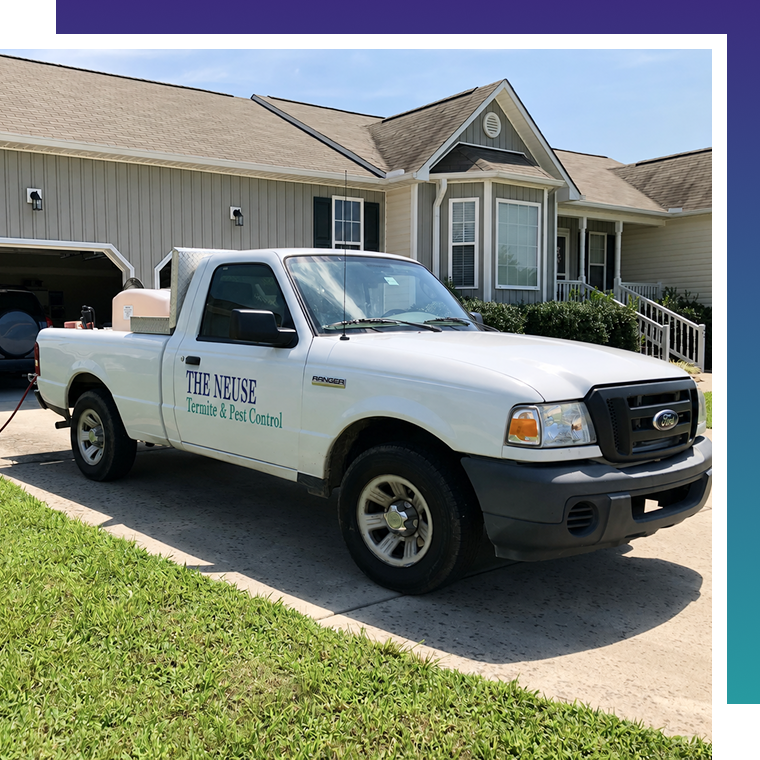


Neuse Termite and Pest Control has opened a Burlington location at 3671 Alamance Rd to serve Alamance County homeowners directly. We bring more than 320 years of combined pest control experience, a 5-star rating from over 2,000 customers across Central NC, and the strongest termite damage repair guarantee in the industry to a market that has not had access to this level of protection from a locally accountable provider.
Burlington homeowners deal with the same termite pressure that affects piedmont communities across the state. The Haw River watershed, Alamance County's clay-heavy soils, and a housing stock that spans from post-war downtown neighborhoods to newly graded subdivisions along the I-85 corridor create conditions where subterranean termites operate year-round.
The question is not whether termites are present in Alamance County soil - they are. The important question is whether your home is protected when they find it.
Why Burlington Homes Face Year-Round Termite Risk
Alamance County's geology and climate work against homeowners when it comes to termite pressure.
Piedmont clay soils throughout the region retain moisture exceptionally well. Saturated soil after rain events stays damp far longer than sandy coastal soils, and subterranean termites depend on consistent ground moisture to survive, expand, and travel toward structures. Burlington's proximity to the Haw River and Alamance Creek creates soil moisture conditions that remain elevated through much of the year.
Burlington's housing stock creates two distinct risk profiles:
- Older neighborhoods in and around downtown Burlington include homes built in the 1940s through 1970s, many with crawl space foundations, original wood construction standards, and decades of landscaping change that can result in direct wood-to-soil contact. These properties may have had quiet termite pressure building for years.
- Newer developments on Burlington's outskirts, particularly along the I-85 and I-40 corridors, are built on recently cleared and graded land where existing soil termite colonies have been displaced toward new construction. Adjacent wooded buffers keep pressure from re-established colonies consistently elevated.